The New England First Amendment Coalition is pleased to announce its support of critical open government litigation in Maine through its recently-established legal fund.
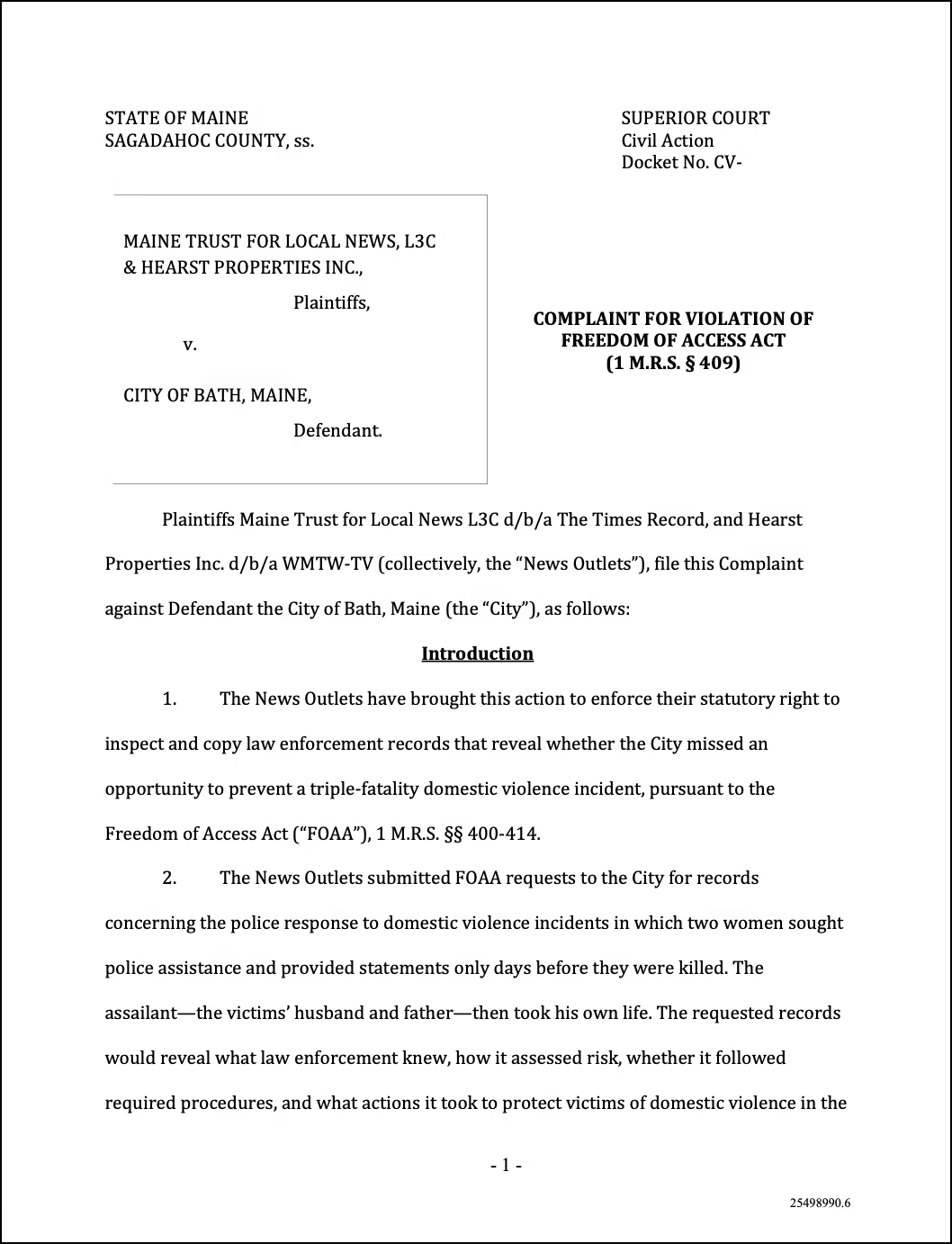
This is the first use of the NEFAC Legal Fund and it will help the Maine Trust for Local News and WMTW answer questions about whether a double homicide in Bath two years ago could have been prevented. Police are keeping key details about their involvement secret.
“Too often government officials are violating public record laws knowing that litigation is not a realistic option for requesters. That’s no longer the case,” said Justin Silverman, NEFAC’s executive director. “When we’re told to go to court, we can now say that we’ll see them there.”
“As journalists, we aim to pursue every avenue we can to view public records that are being unjustly redacted or withheld,” said Norah Hogan, WMTW chief investigative reporter. “Thanks to NEFAC, we are able to fully pursue the release of records that will provide greater accountability.”
The NEFAC Legal Fund began last year with support from the John S. and James L. Knight Foundation. The fund is used exclusively for journalism and open government litigation within the six New England states.
It supports cases in which the coalition is a party or to offset the litigation costs of others who are fighting their own legal battles. The funding is used only when sufficient financial and legal support is not otherwise available.
The Knight Foundation provided a four-year $250,000 commitment, which includes matching granting requirements. The foundation does not dictate what cases NEFAC chooses to litigate.

We need to raise $50,000 by May 31 to meet our matching litigation grant requirements — and we are less than $15,000 away.
Please donate today to the NEFAC Legal Fund.
The Bath case is especially important given the lack of information about potentially preventable domestic violence, but also because police are inappropriately citing the privacy of the victims to justify secrecy.
“Disclosure would allow the public to understand how law enforcement handled prior calls, evaluate whether policies and procedures were followed, and assess whether warnings were missed or lessons could be learned to improve responses to domestic violence incidents,” Maine Trust for Local News and WMTW explained in their April 13 complaint. They are represented by attorneys Sigmund Schutz and Alexandra Harriman at Preti Flaherty.
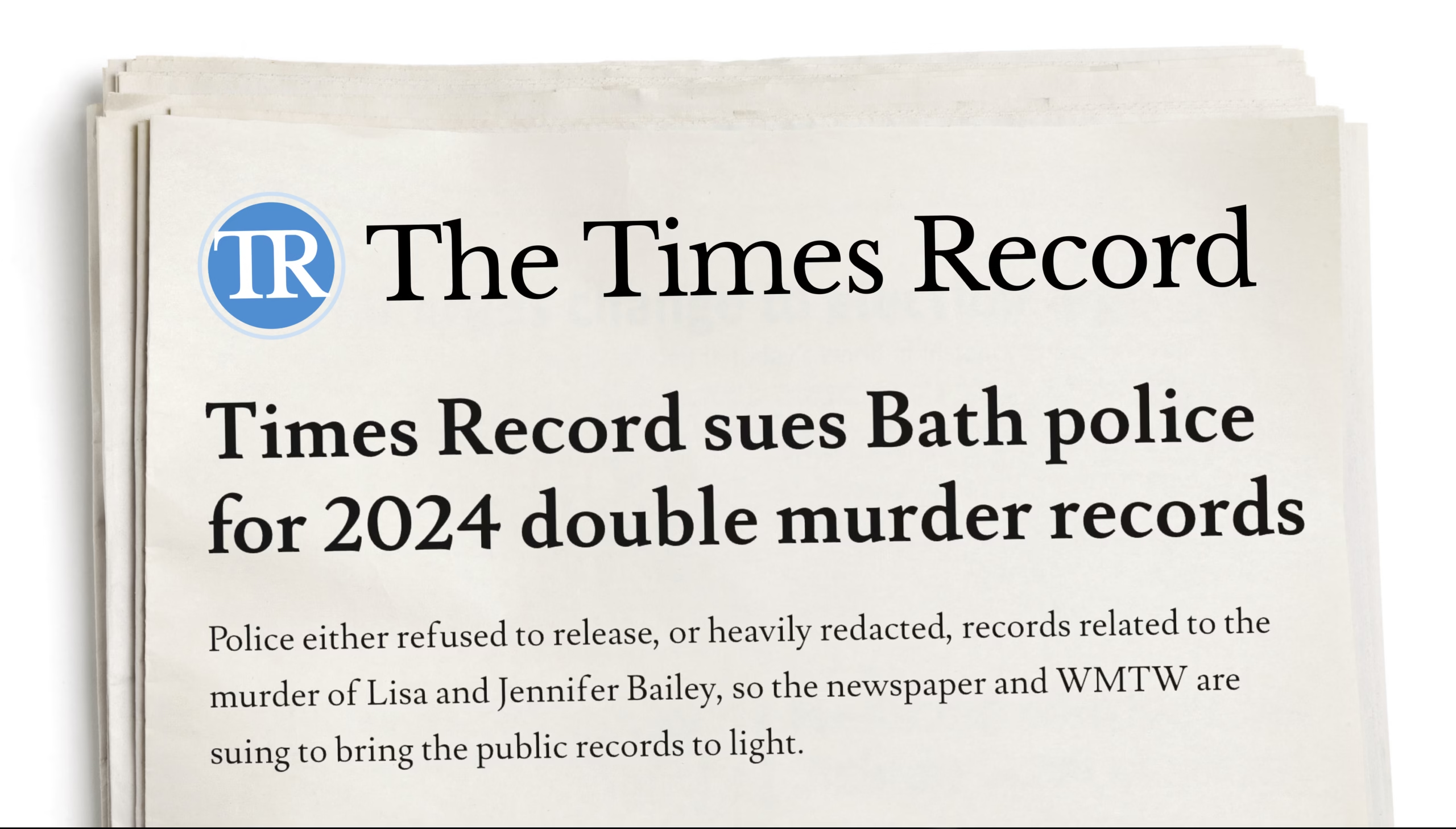 “The public has a right to know how police responded to domestic calls at the Bailey home leading up to the murders,” said Nick McCrea, editor of The Times Record. “We thank NEFAC for supporting this effort to ensure accountability and shed light on what’s been hidden.”
In October 2024, officers from the Bath Police Department in Maine responded to reports of a shooting at a residence. When they arrived at the home, they found the bodies of Lisa Bailey and her daughter Jennifer, both killed by their respective husband and father Michael Bailey who also killed himself.
The murders generated widespread news coverage. Local reporting revealed that officers had been to the home at least twice in the days leading up to the murders. On Sept. 24, officers responded to calls reportedly made because of domestic violence, possibly involving an assault with a knife. No arrests were made. According to a witness, officers carried a couple of rifles from the home but said they soon carried them back inside the residence.
On Oct. 2, both Lisa and Jennifer went to Bath Police Department to fill out statements. Four days later, both of them had been murdered.
The newsrooms obtained reports from the police visits to the Bailey residence prior to the murders, but the pages are so heavily redacted it’s impossible to know what happened or how the police responded.
The legal complaint filed in Sagadahoc County Superior Court claims that the redactions are a violation of Maine’s Freedom of Access Act. Bath Police Department declined to lift the redactions citing the privacy of the family, but under Maine law, rights to privacy are “purely personal,” meaning that they are extinguished upon death and cannot be asserted by a decedent’s relatives or other third parties.
NEFAC is the region’s leading defender of the First Amendment and open government. The coalition began in 2006 to advance and protect the five freedoms of the First Amendment, including the principle of the public’s right to know. We’re a broad-based organization of people who believe in the power of an informed democratic society.
Our coalition is funded through contributions made by those who value the First Amendment and who strive to keep government accountable. Please make a donation here.
NEFAC appreciates the support of all its donors and contributors. In particular, we would like to recognize the Estate of Gloria L. Negri, the John S. and James L. Knight Foundation and the following Leadership Circle donors: Rhode Island Foundation, The Boston Globe, Paul and Ann Sagan, and the Robertson Foundation. Major Supporters of NEFAC’s work include Hearst Connecticut Media Group, Boston University, the Academy of New England Journalists, and Truro News.